
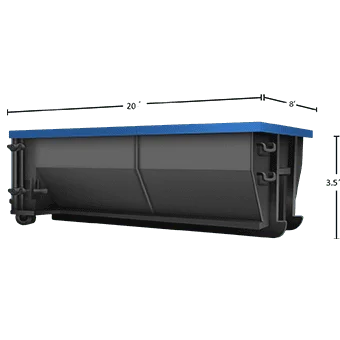
Distinguish the parked container from the vehicle operation
A roll-off is delivered and recovered by the provider’s vehicle arrangement. The actual equipment determines the working space and approach it needs. Ask the supplier to review the proposed entrance, ground, overhead surroundings and position rather than using a generic dimension or assuming a parked-car space is sufficient.
Describe neighbouring activities and any shared pedestrian or vehicle access. Property permission needs to cover the actual proposed use, not only the address. If the suggested position interferes with another necessary operation, resolve it with the responsible contact and supplier before treating it as the accepted destination.
Choose a loading approach that remains usable
Explain how material will reach the container and who will be doing that work. If access through a container door is part of the proposal, confirm that the actual offered model has the required arrangement and ask how it affects the space around it. Do not assume fittings from an illustration.
Keep the proposed loading area distinct from places where people queue, walk through or operate other vehicles. Follow the provider’s actual loading conditions; this guide does not supply machinery procedures, safe drop heights or weight limits. If the intended method does not suit the offered arrangement, discuss a different accepted approach.
Prevent the working space from becoming overflow storage
Loose debris, parked equipment or newly delivered materials can make an initially workable recovery route unusable. Identify the space the supplier needs and keep it clear during the hire, not just on the delivery day. A container that remains visible may still be unreachable for the required operation.
Check acceptance of the actual contents before loading, including changed or uncertain material. Do not place extra items around the container or assume that provider collection includes clearing the approach. If the route becomes blocked, tell the supplier and responsible site contact rather than attempting to move the loaded container yourself.
Agree the period and the next vehicle visit
The quote should describe the container, permitted materials, loading limits, agreed position, rental period and transport. If an exchange is wanted, request it explicitly; it is not an automatic consequence of filling the container. Ask how a changed period or different next load would be handled before the current arrangement ends.
Before collection, confirm the responsible contact and access conditions. Tell the provider about changes to gates, vehicles or the working area while there is time to review them. A safe agreed operation depends on current site information, not a promise that the driver can recover equipment through any obstruction.
Questions before you book
Is the container footprint all the space required?
No. The provider must review the vehicle approach and working space for delivery and recovery as well as the parked position.
Can we store extra debris beside it?
Do not assume that surrounding material is included or that it can occupy the supplier’s working space. Keep the agreed approach clear.
Does every roll-off have the same loading door?
Confirm the actual offered equipment and its loading arrangement; a category name or image is not a specification.
What if the pickup route becomes blocked?
Report the changed condition to the supplier and site contact. Do not move the container or improvise a recovery method.