
Describe the function that must work
A customer may need a suitable entrance, room to manoeuvre, a particular type of support or space for assistance. Explain the relevant function to the supplier without guessing dimensions or requesting private health details from the user. If the person or organiser has specific requirements, keep those clear rather than replacing them with a general request for a larger cabin.
Different users can encounter different barriers at the same site. A unit that one person can use is not evidence that everyone can. Identify the practical requirement early enough for the equipment and location to be assessed, and leave anything unknown as a question instead of claiming that an unreviewed arrangement is suitable.
Ask about the offered equipment, not only its label
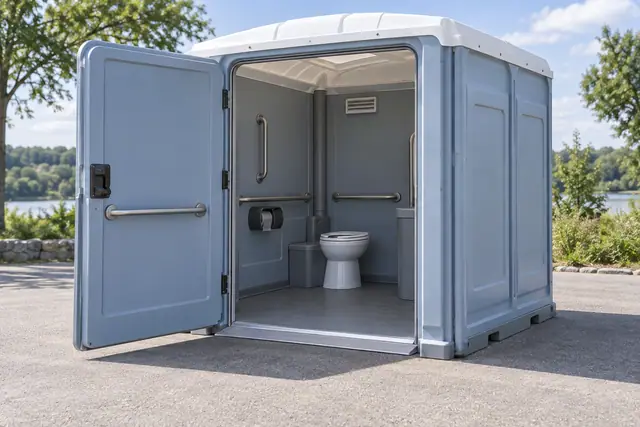
A standard portable cabin provides private toilet use, while broader-access formats may have a different entrance and interior arrangement. Ask for the features of the actual model proposed. A photograph, an accessibility symbol or the word ADA is not a substitute for reviewing the equipment and its intended installation.
Keep separate functions visible. An enhanced feature such as flushing does not establish a usable entrance, and a wider unit does not automatically include a suitable basin. Ask how toilet access and handwashing will be provided for the people using the arrangement. If an important function is unresolved, do not call the equipment selection complete.
Follow the approach to the actual position
Look beyond the cabin itself. Explain where people approach from, what surfaces and barriers they encounter, how the door area remains clear and whether a gate or staff-only route affects access. The property contact and supplier should assess the proposed arrangement; a unit placed on a convenient delivery spot may still be difficult for a user to reach.
Separate a route problem from a model problem. Moving a queue, restoring a blocked approach or agreeing another permitted position may address a different issue from choosing another cabin. Do not improvise ramps or drag equipment into a new place. Any change should be suitable for the actual equipment, property conditions and provider access.
Keep the accepted arrangement usable throughout the rental
Give the provider the Roseburg address, required period, users and approved position. Ask the quote to identify the confirmed equipment, washing arrangement, delivery and collection, cleaning, waste servicing and supplies. Include the property’s responsibilities and a contact who can report a problem, rather than treating the initial placement as the only access check.
During use, keep the agreed approach and door space available. Parked vehicles, stacked materials or event furniture can change an otherwise suitable route. Report the actual barrier or equipment issue promptly and confirm the response with the responsible parties. Final collection still needs the supplier’s agreed working space; it should not require users to relocate the unit themselves.
Questions before you book
Do I need to provide a diagnosis to ask about an accessible unit?
No. Explain the practical access and equipment functions that need to work. A diagnosis is not necessary to describe an entrance, route or space requirement.
Does a wider cabin make the whole site accessible?
No. The actual entrance, interior, approach, position and washing arrangement must be considered together. A label alone does not establish suitability.
Can we add a homemade ramp if the approach is difficult?
Do not improvise an access alteration. Explain the barrier to the supplier and property contact and agree an appropriate equipment or location arrangement.
What should we do if the route becomes blocked?
Report the actual problem and restore or revise the arrangement through the responsible parties. Do not independently move the equipment or assume that a different route is acceptable.